Mom and Child Photo Frame: A Maker's Design Review
When evaluating digital assets for a craft business, the line between a pretty screen preview and a viable production file is often where projects succeed or fail. As a designer who regularly bridges the gap between laser cutting and needlework, I approached the Mom and Child Photo Frame with a critical eye. While this asset is primarily marketed as a laser cut SVG for CNC routers and wall decor, its potential in the textile space requires a specific translation process. For Etsy sellers and makers looking to expand their product lines into mixed media or purely embroidered goods, understanding how this graphic converts to thread is essential before committing it to fabric.
Translating Vector Lines to Stitch Paths
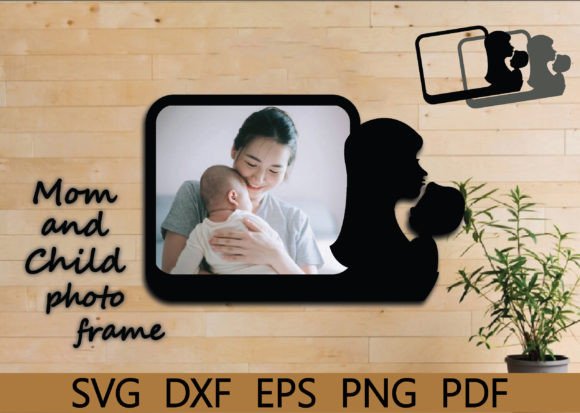
The first impression of the Mom and Child Photo Frame is one of sentimental warmth and clean geometry. Visually, it balances intricate detail with open negative space, which is promising for adaptation. However, because this originates as a laser cut file rather than a native machine embroidery design, we must assess its structural integrity for stitching. Laser files rely on continuous vector paths for cutting, whereas embroidery relies on distinct stitch types like satin stitch, fill stitch, and running stitch.
In my assessment, the frame’s outer borders appear substantial enough to support a satin column without excessive puckering, provided the digitizing respects the original vector width. The internal illustration of the mother and child, however, presents a unique challenge. If you are converting this graphic yourself or hiring a digitizer, pay close attention to the facial features and hair flow. These elements cannot simply be traced; they must be interpreted. A direct trace often results in stiff, unnatural outlines. Instead, successful baby embroidery or family portraits require artistic fill stitches that mimic shading and texture. The mood of this piece demands softness, so rigid running stitches around the figures should be avoided in favor of blended fills that capture the emotional weight of the subject matter.
Real-World Application: The Nursery Keepsake Test
To truly judge the viability of the Mom and Child Photo Frame, I mentally placed it into a real-life production scenario: creating a premium nursery wall hanging or a personalized gift blanket. This is a high-stakes embroidery project where customer expectations for quality are exceptionally high. In this context, the design serves as more than just decoration; it is an emotional anchor.
For a nursery application, I envision pairing this design with a textured waffle knit or organic cotton muslin. Here, the fabric texture plays a massive role. The clean lines of the photo frame concept provide necessary structure against the soft, irregular weave of baby textiles. If I were producing this for a boutique shop, I would likely treat the "frame" portion as an applique design. Using a contrasting linen or velvet for the frame border adds tactile value that print or laser-cut wood cannot achieve alone. This mixed-media approach elevates the perceived value of the finished product, justifying a higher price point for commercial embroidery ventures.
Furthermore, consider the personalization aspect. The center of this frame naturally invites a name or date. When integrating text into this specific layout, ensure the font choice matches the delicate nature of the mother-child illustration. A heavy block font would clash with the tender artwork. Script or serif fonts with moderate weight maintain visual harmony. This attention to typographic detail is what separates professional design assets from amateur crafts.
Navigating Fabric Limitations and Hoop Constraints
While the Mom and Child Photo Frame has strong aesthetic appeal, it requires careful handling regarding placement and substrate. Not every garment or textile is a suitable canvas for this level of detail. I advise extreme caution when attempting this design on stretchy fabrics like jersey knits or ribbed t-shirts without industrial-grade stabilization. The density required to render the mother and child clearly can distort lightweight fabrics, leading to a warped final image.
Hoop size selection is another critical factor. This design likely spans a significant area to maintain legibility of the illustration. Attempting to shrink this down to fit a 4x4 hoop will result in lost details and muddy stitching. Small lettering within the frame may become unreadable if scaled below 6mm height. Always verify the minimum safe dimensions before purchasing or digitizing. If your machine limits you to smaller hoops, consider splitting the design or using it exclusively for larger home decor items like pillow covers or tote bags rather than apparel.
Dark fabrics also present a risk. Unless the design includes a white underlay or is specifically digitized for dark garments, the subtle shading in the mother-child illustration may disappear against navy or black backgrounds. For custom apparel on dark garments, I recommend testing a printable mockup or a physical stitch-out on scrap fabric first. Contrast is key to ensuring the emotional impact of the design translates across different colorways.
Professional Standards for Commercial Makers
For those running a handmade product business, consistency builds trust. Using the Mom and Child Photo Frame as a signature item requires rigorous quality control. Before listing any personalized gift featuring this artwork, run a complete test stitch-out. Check the registration marks between the frame border and the central illustration. Misalignment here ruins the illusion of a cohesive frame. Additionally, inspect the back of the embroidery. Excessive jump stitches or messy trims indicate poor digitizing, which can snag on baby clothes or reduce the longevity of a tote bag design.
Licensing is equally important. Since this product is described as a laser cut file, verify whether the license extends to embroidery digitization and commercial sale of stitched goods. Some designers restrict vector files to paper or wood products only. Clarifying this protects your small shop product listings from copyright issues. If you are selling the physical embroidered item versus the digital embroidery file itself, the terms may differ. Never assume cross-platform compatibility implies cross-medium licensing.
Designer Checklist for Success
- Verify Origin: Confirm if you are receiving a pre-digitized embroidery file or a vector graphic requiring conversion.
- Stabilizer Strategy: Use cut-away stabilizer for stretchy fabrics and tear-away for stable woven fabrics to prevent frame distortion.
- Thread Selection: Opt for matte or rayon threads depending on the desired finish; polyester offers durability for frequent washing, while rayon provides sheen for display pieces.
- Scale Testing: Print the design at actual size on paper before stitching to visualize coverage and detail clarity.
- Mockup Validation: Create realistic previews showing the design on the intended end product to manage customer expectations accurately.
- Wash Test: If selling baby items or apparel, wash the test sample to ensure the dense stitch areas do not pucker or damage the fabric over time.
The Mom and Child Photo Frame holds immense potential for creators willing to respect its technical requirements. It bridges the gap between modern fabrication and traditional needle arts beautifully. By approaching this graphic with a maker’s mindset—prioritizing stitch physics over mere aesthetics—you can transform a simple digital file into a cherished heirloom. Whether used for a holiday collection, a bespoke nursery commission, or a staple in your Etsy shop, this design rewards patience and precision with a timeless emotional resonance that customers deeply value.