Momster Design Review: Real Embroidery Use
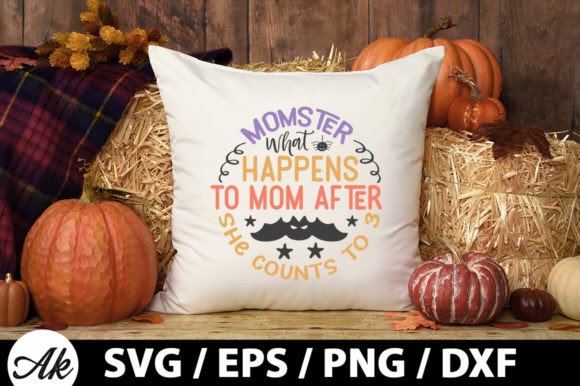
As a professional embroidery digitizer and product reviewer, I approach every new graphic with a specific question: will this actually stitch out cleanly on fabric? When evaluating the Momster What Happens to Mom After She Co design, my focus shifts immediately from its digital appearance to its physical performance. This graphic, featuring the humorous "Momster what happens to mom after she counts to 3" phrase within a round sign layout, is marketed primarily as an SVG for cutting and printing. However, for those of us in the Crafts industry who bridge the gap between vinyl and thread, understanding how this Graphics asset translates into a machine embroidery design is critical for business success.
First Impressions and Visual Personality
My initial assessment of Momster What Happens to Mom After She Co is that it carries a distinct, relatable humor perfect for the modern parenting niche. The round sign format provides a natural boundary, which is excellent for framing in embroidery hoops or creating circular patches. Visually, the mood is playful yet cautionary, striking a balance that appeals to mothers looking for personalized gifts or custom apparel that speaks to their daily reality. For an Etsy seller or small shop owner, this theme has high engagement potential because it validates a shared experience.
However, as a designer, I note that text-heavy graphics require careful scrutiny. The phrase "counts to 3" implies numerical clarity, and in embroidery, small numbers can easily become illegible if the stitch density is too high or the font choice in the digitized version is too ornate. The round shape suggests versatility; it naturally fits tote bags, sweatshirts, and even nursery decor without feeling forced. It does not look like a generic clip-art dump but rather a cohesive badge-style layout that lends itself well to professional finishing.
Real-World Application: The Sweatshirt Test
To truly evaluate this asset, I mentally placed Momster What Happens to Mom After She Co onto a heavyweight cotton sweatshirt, a staple for any handmade product line targeting moms. In this real-life scenario, I am preparing a sample for a holiday craft fair. The goal is a cozy, boutique-quality feel. Because the original file is an SVG intended for cut and print, converting or sourcing a proper embroidery file version is the first hurdle. Assuming a quality digitization exists or is created, the round sign layout centers beautifully on the chest area of a crewneck sweatshirt.
For this project, I would utilize a combination of fill stitch for the background sign and satin stitch for the border to create definition against the fleece texture. The text would ideally be done in a sturdy column stitch or a specialized font designed for embroidery to prevent puckering. As a custom apparel piece, this design works best when the thread colors contrast sharply with the garment. A white sign with black text on a heather grey sweatshirt ensures readability from a distance. If I were selling this as a finished product, the visual clarity of the "counts to 3" text would be the selling point; if customers have to squint to read the joke, the product value drops significantly.
Navigating Fabric Limitations and Hoop Sizes
While Momster What Happens to Mom After She Co is versatile, it demands respect for fabric physics. I would advise extreme caution when attempting this design on stretchy fabrics like ribbed knits or thin jersey without adequate stabilizer. The density required to make the round sign opaque can cause tunneling or distortion on unstable fabrics. For baby embroidery projects, such as onesies, the design might need to be scaled down. Here lies a risk: reducing a text-based design below 3 inches often results in lost detail. Always check the minimum recommended size in your embroidery file metadata before committing to baby clothes.
Textured fabrics like terry cloth tea towels or canvas tote bags present another challenge. The loops of the towel can swallow running stitches and thin satin borders. For these applications, I recommend using a water-soluble topping to keep the stitches of Momster What Happens to Mom After She Co sitting proudly on top of the fabric pile. Conversely, on smooth surfaces like caps or nylon windbreakers, the design should perform exceptionally well, provided the hoop size accommodates the full diameter without requiring excessive re-hooping. Curved surfaces like caps may distort the perfect circle of the sign, so testing on a curved cap frame versus a flat hoop is a necessary step for commercial embroidery consistency.
Impact on Brand Value and Customer Trust
Using Momster What Happens to Mom After She Co effectively can elevate a craft business from hobbyist to professional. Clean registration, where the outline meets the fill perfectly, signals quality to buyers. When a customer purchases a personalized gift featuring this witty phrase, they are buying the emotion behind the joke. If the embroidery is sloppy, with gaps in the satin stitch or misaligned letters, it undermines the humor and devalues the brand. High-quality execution of this design builds trust. It shows that the maker understands both the technical aspects of machine embroidery and the aesthetic needs of the client.
Furthermore, this design serves as excellent content for printable mockups and digital product previews. Even if you sell the physical embroidered item, showing a clean digital preview helps set expectations. For sellers offering the digital embroidery file itself, ensuring the design is optimized for multiple hoop sizes increases its utility. Buyers want to know they can use Momster What Happens to Mom After She Co on a 4x4 hoop for a pocket logo or a 6x10 hoop for a jacket back. Versatility drives sales in the digital assets market.
Essential Designer Notes for Success
Before stitching Momster What Happens to Mom After She Co for sale or gifting, adhere to these practical guidelines:
- Verify File Integrity: Since the source description highlights SVG for cutting, confirm you have a true embroidery file format (PES, DST, JEF, etc.) and not just a converted vector. Auto-digitized conversions often lack proper underlay and pull compensation.
- Test Stitch Density: Run a test on scrap fabric identical to your final project. Check if the fill stitch is too dense for the material or if the text is legible at your intended size.
- Stabilizer Selection: Match your stabilizer to the fabric weight. Use cut-away for knits and tear-away for stable wovens. Never skip the stabilizer on a design with this much coverage.
- Thread Contrast Check: View your thread color choices in black and white mode on your machine screen or software. If the values are too similar, the "counts to 3" message will disappear visually.
- Licensing Confirmation: Crucially, verify the commercial license terms. Just because a file is sold as a digital download does not automatically grant permission to sell finished embroidered products or resell the digital file. Protect your business by reading the fine print.
- Mockup Validation: Create a realistic mockup to see how the round sign interacts with garment seams, pockets, or zippers. Ensure the design placement avoids structural elements of the clothing.
Momster What Happens to Mom After She Co holds significant promise for makers in the parenting and humor niches. Its strength lies in its relatable messaging and contained shape, making it adaptable for everything from embroidered patches to holiday sweatshirts. However, its success depends entirely on the technical proficiency of the embroiderer. By treating this graphic not just as a cute image but as a structured embroidery project requiring proper stabilization, density management, and fabric consideration, you can transform a simple digital file into a premium handmade product that resonates with customers and stands up to wear. Always prioritize the stitch-out quality over speed, and let the humor of the design shine through impeccable craftsmanship.