Mom and Child Metal Wall Art: An Embroidery Review
As a designer who constantly bridges the gap between digital graphics and tangible textiles, I often find myself evaluating assets originally intended for one medium to see if they can survive the transition to another. The Mom and Child Metal Wall Art file is explicitly marketed as a laser cut SVG for CNC routers and wall decor. However, for those of us in the Crafts and Graphics space who run embroidery businesses, this raises an immediate question: Can a design born from metal fabrication translate into a soft, stitch-based machine embroidery design? After analyzing the vector lines and visual weight of this illustration, I have some practical insights for makers considering this asset for their next embroidery project.
Translating Rigid Lines to Soft Stitches
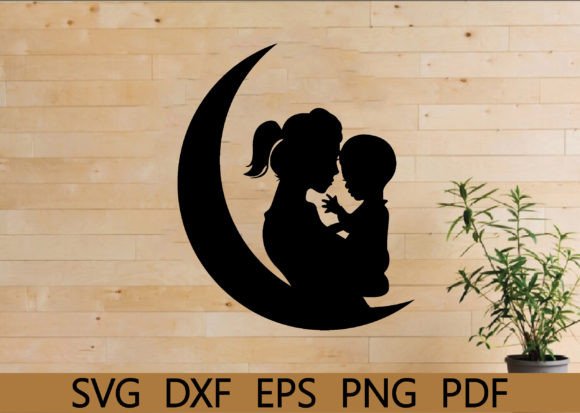
My first impression of the Mom and Child Metal Wall Art graphic is its elegant simplicity. Because it was designed for laser cutting, the lines are continuous, bold, and unbroken. There is no shading or gradient to worry about, which is actually a blessing for digitizers. In the world of sweatshirt embroidery or baby embroidery, clean silhouettes often perform better than hyper-detailed illustrations because they remain legible at smaller sizes.
The mood is undeniably tender yet modern. It avoids the cloying sweetness of traditional nursery clip art, leaning instead toward a minimalist aesthetic that appeals to contemporary parents. For an Etsy seller or boutique owner, this visual personality suggests high perceived value. It feels like a premium handmade product rather than mass-produced merchandise. However, because the original intent was metal, you must be mindful of line thickness. What looks like a sturdy steel beam in a CNC file might become a dense, bulletproof ridge of thread on a baby onesie if not adjusted properly during the digitizing process.
Real-World Application: The Custom Tote Bag Test
To truly evaluate this design, I mentally placed it into a real-life production scenario: creating a custom canvas tote bag as a Mother’s Day gift or retail item. A tote bag design needs to withstand wear, washing, and the natural texture of canvas. The Mom and Child Metal Wall Art silhouette works exceptionally well here because the bold shapes allow for versatile stitching techniques.
I envision using a combination of satin stitch for the outer contours to mimic the smooth edge of cut metal, paired with a lighter fill stitch or even negative space to keep the design from becoming too heavy. If you were to stitch this out as a solid shape without modification, the canvas might pucker, and the bag could lose its drape. By treating the vector lines as guides rather than absolute boundaries, you can create a breathable, professional-looking finished product. This approach also makes it suitable for applique design work, where the fabric itself provides the fill, and the embroidery merely secures the edges. This reduces stitch density significantly, making the final item softer and more commercially viable for customers who dislike stiff embroidery.
Navigating Fabric Limitations and Hoop Sizes
While the design is versatile, its origin as a wall art piece means you must exercise caution regarding scale and substrate. Not every fabric texture will support the linear precision of this graphic. I would advise against using this specific design on highly textured fabrics like terry cloth or loose-knit sweaters unless you plan to use a heavy water-soluble topping. The fine details inherent in the mother-and-child interaction could get lost in the pile.
Furthermore, consider your hoop size limitations. Metal art can be scaled infinitely; thread cannot. If you attempt to shrink this design down to fit a 4x4 hoop for a personalized gift tag or a sleeve cuff, the proximity of the lines may cause thread breaks or registration issues. Always check the minimum recommended size after digitizing. Conversely, stretching it to fill a large jacket back requires careful underlay planning to prevent distortion. For stretchy fabrics like jersey knits used in custom apparel, a robust stabilizer strategy is non-negotiable. The continuous lines of this design act like tension cables; if the fabric shifts during stitching, the entire silhouette will warp, ruining the emotional impact of the piece.
Commercial Viability for Small Business Owners
For the craft business owner or small shop product developer, time is money. The Mom and Child Metal Wall Art offers a distinct advantage: its universal appeal. Unlike trendy memes or seasonal characters, this theme has year-round relevance for holiday embroidery, baby showers, and anniversaries. As a digital embroidery file asset, it serves as a reliable backbone for a capsule collection.
However, professionalism dictates due diligence. Before listing any commercial embroidery items derived from this graphic, you must verify the licensing terms. Just because a file is sold as a "laser cut SVG" does not automatically grant commercial rights for embroidered goods. Confirm whether the license covers physical products, printable mockups, or digital resale. Protecting your business means respecting intellectual property. Additionally, when creating listings, use black and white mockups alongside colored previews. This helps customers visualize the design as a texture rather than just a flat image, bridging the expectation gap between digital art and stitched reality.
Designer Notes for Successful Execution
If you decide to adapt Mom and Child Metal Wall Art for needle and thread, treat the source file as a blueprint, not a final pattern. Here are my practical recommendations for ensuring quality:
- Test Stitch First: Never run this design on a final garment without testing on scrap fabric of similar weight. Check how the curves handle direction changes.
- Evaluate Thread Colors: While the original is likely monochromatic metal, embroidery allows for nuance. Test variegated threads or tone-on-tone palettes to add depth that flat metal lacks.
- Check Licensing: Reiterate checking if the design assets permit modification and commercial sale of embroidered patches or apparel.
- Mockup Realistically: Use software that simulates stitch texture. A flat vector preview misleads buyers about the tactile nature of the finished product.
- Adjust Density: Manually reduce density in fill areas if adapting for lightweight fabrics. Metal art implies solidity; embroidery requires breathability.
- Verify Compatibility: Ensure your converted embroidery file format matches your machine’s requirements before starting production.
Ultimately, Mom and Child Metal Wall Art represents a fantastic opportunity for cross-medium creativity. Its strong bones and emotional resonance make it a worthy candidate for adaptation, provided you respect the physics of thread. Whether you are crafting a heartfelt personalized gift or expanding your Etsy seller catalog, approaching this graphic with a textile-first mindset will yield results that honor both the original art and the craft of embroidery.